
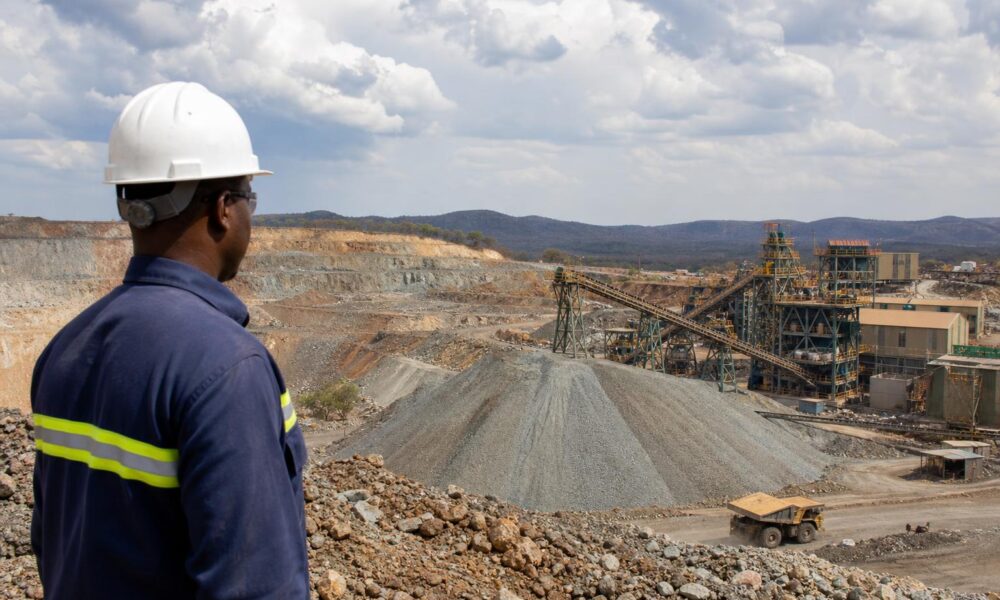
Zambia is drawing billions of dollars into its mining sector as the government seeks to raise copper production sharply and expand the country’s role in supplying minerals linked to the global energy transition.
Table Of Content
The investment drive has renewed debate over whether mining is delivering better conditions for workers, stronger opportunities for Zambian businesses and adequate protection for communities and waterways near mining operations.
Investment and production ambitions
President Hakainde Hichilema said more than $12bn had been invested in Zambia’s mining sector since 2022. One of the largest commitments came from International Resources Holding, which pledged $1.1bn to recapitalise Mopani Copper Mines.
Under the arrangement, International Resources Holding received a 51 percent stake in Mopani, while state-owned ZCCM Investments Holdings retained 49 percent.
The government has set a target of increasing annual copper production to 3 million tonnes by 2031. That compares with less than 1 million tonnes produced annually in recent years.
To improve knowledge of the country’s mineral resources, Zambia is also conducting a nationwide high-resolution aerial geophysical survey. The Ministry of Mines and Minerals Development said the exercise was about 98 percent complete and is intended to help identify mineral deposits that have not previously been explored.
Smaller Chinese-owned processing plants have also expanded in Copperbelt province. Some of these facilities source ore from artisanal and small-scale miners, while concerns have been raised about safety standards, regulatory supervision and environmental protection.
Plans for more value-added production
Zambia has traditionally exported copper cathodes to China and other industrialised countries. The government now wants a larger share of mineral processing and manufacturing to take place domestically.
Hichilema has pointed to copper, cobalt, nickel, lithium, manganese and rare earth metals as resources that could support wider economic development. Speaking to delegates at the Zambia Mining and Investment Forum in Lusaka on October 19, he said the country should use its minerals for its own economy in a way comparable to the United Arab Emirates’ use of oil and gas.
Zambia and the Democratic Republic of the Congo are also exploring cooperation with South Africa on electric-vehicle battery manufacturing. Hichilema said the proposed venture could use Congolese and Zambian inputs in batteries for vehicles produced on South African manufacturing lines. The partnership remains at the proposal stage, with no finalized implementation timetable established.
Workers and communities seek a greater share
For mineworkers, higher copper prices and increased investment have not necessarily translated into improved employment conditions.
Stephen Mwaanga, secretary of the National Union of Miners and Allied Workers, told Al Jazeera that workers were experiencing the same conditions despite the sector’s growth. He said a balance was needed between improving workers’ conditions and addressing the challenges facing mining companies.
Mwaanga also linked higher fuel prices and rising production costs to disruptions affecting traffic through the Strait of Hormuz, which he associated with the US-Israel war on Iran.
Environmental concerns have added to the debate. In February 2025, a structural failure at a tailings dam operated by Sino-Metals Leach Zambia released acidic, metal-laden waste into the Chambishi Stream. The waste spread downstream into the Mwambashi and Kafue river systems.
A subsequent assessment by the Zambia Environmental Management Agency documented ecological damage and effects on the affected waterways. Human rights defender Eugene Mulenga said farmers and poorer people who depend directly on water bodies near mining sites were being affected by expanding mining activity.
Local procurement rules
The government has introduced local-content regulations intended to increase participation by Zambian suppliers. Mining companies are required to allocate at least 20 percent of their 2026 procurement budgets for core mining goods and services to local suppliers. The threshold is scheduled to rise to 25 percent after one year, with further increases planned.
It remains unclear whether the investment boom will produce broad improvements in living standards. Zambia’s ambitions are also exposed to practical pressures, including reduced hydropower availability during drought conditions and the need to secure electricity imports and alternative power sources.





No Comment! Be the first one.