
Malawi Fuel Shortages Disrupt Transport, Businesses and Essential Services
Fuel shortages in Malawi are disrupting transport, businesses and access to essential services, while long queues and informal sales have contributed to confrontations, fires and deaths.

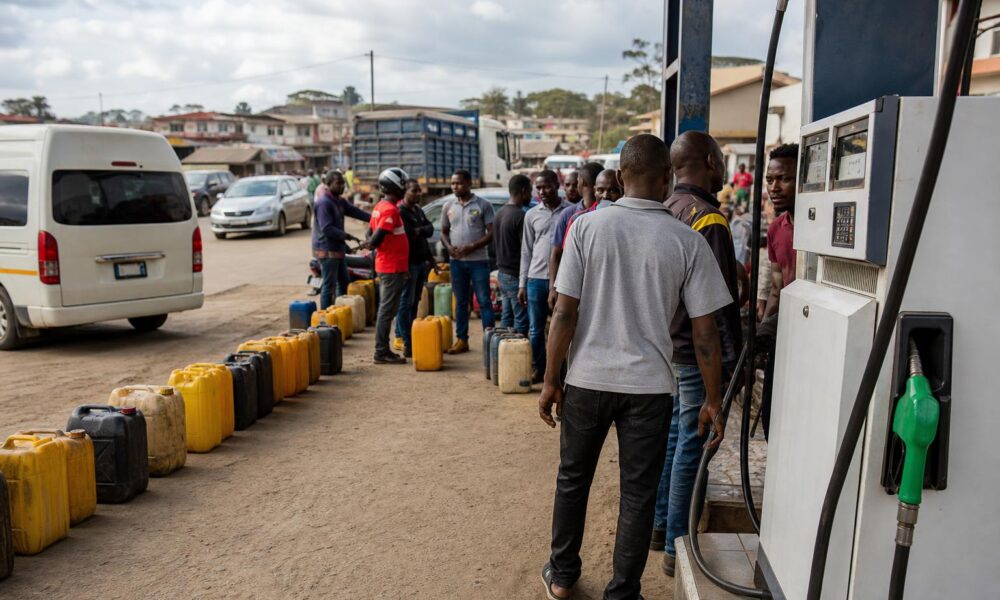
Fuel shortages across Malawi are disrupting transport, businesses and access to essential services, with motorists facing long waits, uncertain deliveries and sharply higher prices on informal markets.
Table Of Content
Drivers have reportedly spent hours or entire nights at filling stations waiting for tankers that may not arrive. Queues have become sources of tension, with disputes over position and access to limited supplies sometimes escalating into violence.
Long waits and limited supplies
Ken Mhango, who described conditions at a filling station in Blantyre, said he waited four hours to obtain 20 litres of fuel while some motorists spent the night in the queue.
“Minibus drivers and motorcycle taxi operators started arriving and jumping queues,” Mhango said. He described a scuffle at the station and said some people, including women, were trying to protect their places in line.
Fuel purchases were reportedly limited to 20 litres a day, according to Mhango, while some motorists paid attendants for an additional five litres. At Nyabadwe filling station, he said he arrived at 5pm, a tanker reached the site at 9pm and remained there until 1am.
When supplies ran out, Mhango said he paid 30,000 Malawian kwacha, about $17.31, for two litres of petrol through the informal market. GlobalPetrolPrices puts the price of petrol in Malawi at about $3.24 per litre, compared with a global average of approximately $1.52.
Although the Malawi Energy Regulatory Authority publishes daily schedules showing which stations are expected to receive fuel, motorists remain unsure whether deliveries will take place.
Impact on livelihoods and daily life
The shortages have affected public transport operators, businesses and households. Tadala Kachingwe, a motorcycle taxi operator, said the crisis had reduced his earnings and made it impossible to maintain the savings he previously had.
In Limbe, Kachingwe said minibuses had blocked access points around a filling station, making it difficult for motorcycle taxi operators to join the queue. He said he was considering paying people to get his motorcycle into the station.
Mhango said the disruption had altered his travel and business activities. “Now commuting is no longer a norm but a luxury,” he said, adding that customers were no longer bringing vehicles to his garage and that he could not take equipment to clients.
Michael Kaiyatsa, chairperson of the Human Rights Defenders Coalition, said the crisis was affecting access to healthcare, education, food, employment and other essential services. He said families were struggling to take children to school, small businesses were losing money and workers were unable to reach their jobs.
Safety concerns and postponed protests
Informal fuel trading has also raised safety concerns. Selling fuel without the required permits is illegal in Malawi, and unsafe storage has been linked to fires and explosions. Malawi’s Nation newspaper reported that at least six people had died in fuel explosions in the country this year.
Local media also reported that a filling-station attendant was killed after being struck by a vehicle during a commotion. The mayor of Blantyre was reportedly sued for assault following an incident at a fuel queue.
The Human Rights Defenders Coalition planned nationwide demonstrations calling for the resignation of the energy minister over fuel shortages and power cuts. The protests, planned for November 17, were postponed after police said they could not provide adequate security because officers were committed to a governing-party parade.
Kaiyatsa said the postponement reflected public-safety concerns rather than a withdrawal of the coalition’s demands. He called on the government to restore normal fuel supplies and said enforcement against informal sellers should respect human rights, proportionality and due process.
Government cites import constraints
The Ministry of Energy attributed the supply problems to financial, foreign-exchange and logistical constraints affecting petroleum imports. In a statement issued before the planned demonstrations, the ministry said government interventions were under way to restore supplies and rejected accusations of inaction.
The ministry’s statement did not establish when conditions would improve, and the available account does not confirm whether the interventions had restored or increased fuel availability.




No Comment! Be the first one.