
Questions Raised Over Alleged Political Sponsorship of Bondo Ceremonies
A discussion of alleged political sponsorship of mass Bondo initiation ceremonies in Sierra Leone is calling for independent investigations, transparency and stronger protection for girls.

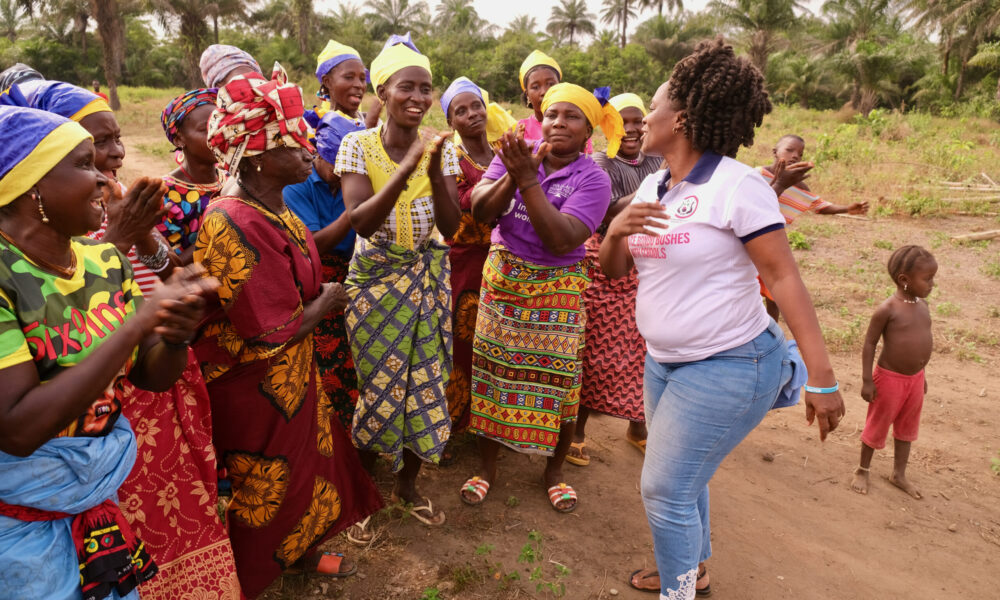
Questions over possible political involvement in mass Bondo initiation ceremonies in Sierra Leone have prompted calls for independent investigation, financial transparency and accountability.
Table Of Content
The allegations concern ceremonies in which female genital mutilation (FGM) may be performed. However, the available account does not establish that politicians have sponsored such events, identify any alleged sponsors or link specific political parties to them.
Writing on the issue, Sierra Leonean humanitarian and child-rights advocate Ishmeal Alfred Charles argues that reports of political involvement should be examined through verifiable evidence rather than assumption. He says investigators should review financial records, credible eyewitness testimony, statements from organizers, public announcements and other relevant documentation before assigning responsibility.
Separating Bondo from FGM
The discussion distinguishes Bondo as a traditional institution from the cutting associated with some initiation ceremonies. Bondo is described as being linked to cultural instruction, community belonging, traditional knowledge and initiation into womanhood. Not every Bondo initiation necessarily involves FGM.
Charles says cultural identity should not be used to justify harm to girls. “No cultural institution should be beyond constructive reform, and no girl should have to surrender her rights to secure acceptance in her community,” he writes.
The account also points to a ceremony in Port Loko District documented by Politico SL, where approximately 70 young initiates reportedly took part without the cutting ritual. Traditional practitioners involved in that initiative reportedly pledged to stop performing FGM.
Health and legal concerns
FGM is described as having no health benefits and as carrying risks that can include severe bleeding, infections, urinary difficulties, chronic pain, sexual-health complications, psychological trauma and childbirth complications.
UNICEF estimates cited in the discussion indicate that more than 230 million girls and women alive today have undergone FGM. More than 144 million are reported to be in Africa, while more than 80 million are in Asia and approximately 6 million are in the Middle East. The World Health Organization is cited as estimating that more than 4 million girls face the risk of undergoing FGM each year.
Sierra Leone’s 2019 Demographic and Health Survey, as cited, found that approximately 83 per cent of women and girls aged 15 to 49 had undergone FGM, compared with 90 per cent in 2013.
The account notes that Sierra Leone enacted the Prohibition of Child Marriage Act in 2024, but says the sources reviewed indicate that the country does not have a comprehensive law explicitly criminalizing FGM as a practice in itself. It calls on Parliament and relevant institutions to address the reported legal gap and strengthen reporting, referral, medical, psychological and social-support systems.
Calls for accountability and reform
The discussion also examines whether financial incentives may help sustain some initiation practices. It cites warnings reported by Awoko in June 2026 concerning substantial fees linked to initiation and training, while emphasizing that those claims require careful verification.
Charles urges political leaders to state their positions, disclose any involvement and demonstrate that protecting girls takes precedence over political advantage. He also calls on traditional authorities, men, survivors, journalists, civil-society organizations and international development partners to support reform.
Among the proposed measures are alternative livelihoods for traditional practitioners, community education and dignified cultural practices that do not depend on cutting.
“The question is whether preserving that heritage must come at the expense of a girl’s health, dignity and fundamental rights. It must not,” Charles says.



No Comment! Be the first one.