
Guinea’s Emerging Filmmakers Work to Rebuild a Struggling Industry
Young Guinean filmmakers are turning to training programmes and creative incubators to help revive an industry weakened by closed cinemas, limited resources and restricted access to funding.

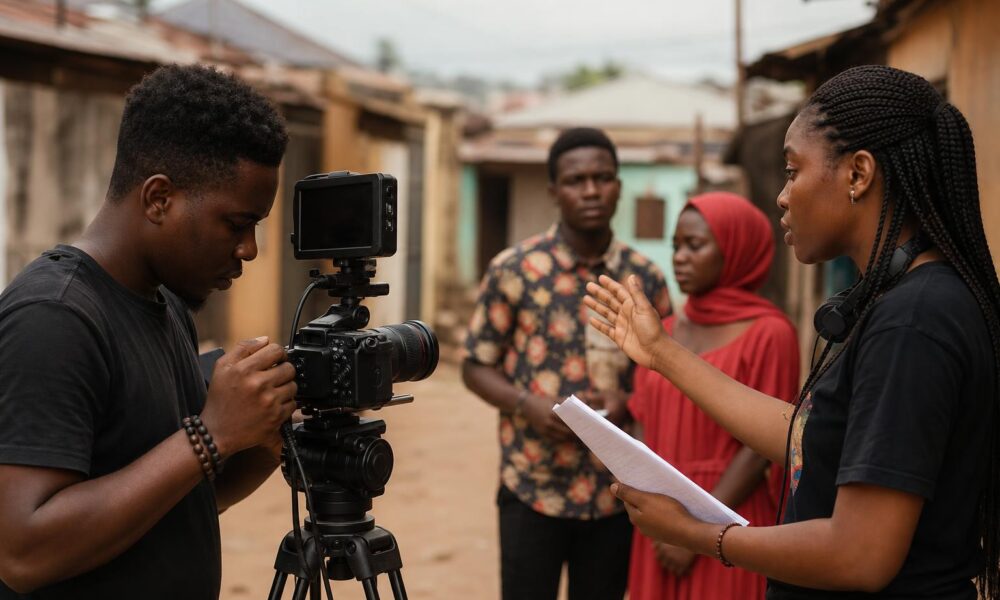
A new generation of Guinean filmmakers is working to revive a national cinema industry that has struggled after years of decline.
Table Of Content
Emerging talent is receiving support through filmmaking courses and creative incubators, including Saboutech. The initiatives provide instruction in screenwriting, directing, video editing and sound production, while also helping participants develop projects and produce films.
Training opens a path for new talent
For students such as Hady Camara, the training has been an important part of developing skills and gaining a foothold in the industry. Camara described the programme as significant to their development and growth as a filmmaker.
Saboutech has also created a pathway for knowledge to be passed between generations. Alhassane Baldé first joined the incubator as a student and returned for its second edition as a coach. In that role, he helped young participants produce their own films.
Baldé has also presented a film at FESPACO, one of Africa’s leading film festivals, highlighting the possibility of progress for filmmakers emerging from Guinea’s training and support programmes.
Few places remain for audiences
The recovery effort is taking place against a difficult backdrop. Former cinemas have closed, leaving audiences with limited opportunities to watch local productions. In Tombolia, Conakry, a former cinema remains closed and has opened only occasionally, including for a screening during Independence Day celebrations.
The Franco-Guinean Cultural Centre is currently the only venue in Conakry that regularly hosts film screenings, according to the source report.
Dust-covered cameras and old film reels remain reminders of the challenges confronting the sector, while the closure of cinemas has reduced both exhibition opportunities and public access to local films.
Filmmakers call for wider industry support
Those involved in the sector say training, while valuable, cannot by itself restore Guinean cinema. They identify sustainable funding, dependable production structures and stronger distribution networks as necessary to help young filmmakers remain in the industry.
Fatoumata Segnane Condé warned that without regular funding and proper operating budgets, many young filmmakers could lose the confidence to continue and eventually give up.
The source report says Guinea has both talent and initiatives that could support a revival. However, filmmakers continue to face limited production resources and difficult access to funding. The long-term recovery of the industry will depend on whether new skills can be matched with the financial, technical and distribution support needed to turn projects into sustainable careers.





No Comment! Be the first one.